


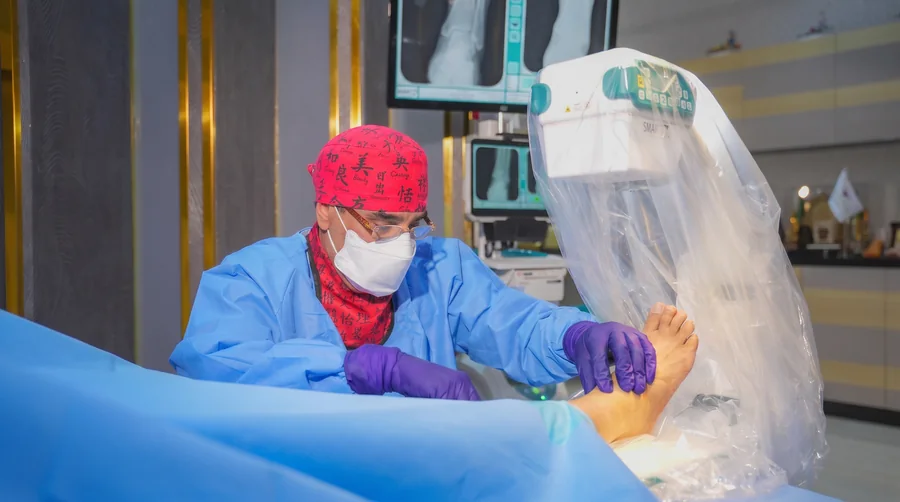
Heel pain and plantar fasciitis
Confident steps start with a pain-free heel.

آلام كعب القدم لا تشخّصها إلا لدى متخصص…
Plantar fasciitis often causes heel pain, and neglect and progression of the condition may lead to heel bone calluses..
Heel pain may also be due to other causes:
- Fractures resulting from physical stress.
- Tendinitis.
- arthritis.
- Nerve irritation.
- The presence of a pressure cyst, which is rare.
The correct diagnosis of heel pain is very important, given its multiple possible causes, which only a foot and ankle surgeon can accurately diagnose and differentiate between..
Learn about plantar fasciitis…
It is an inflammation and irritation of the ligament of tissue (fascia) that extends from the heel to the toes, causing pain in the heel..
Its symptoms
- Pain at the bottom of the heel.
- Pain that gets worse when getting up after resting.
- Pain that worsens over time.
Its causes
- The most common cause of plantar fasciitis is a defect in the structure of the foot.
- Wear shoes that do not have appropriate medical supports.
- Obesity and weight gain.
التشخيص
The diagnosis is based on a clinical examination and the patient’s medical history, and during this process the doctor rules out all possible causes of heel pain except plantar fasciitis..
The treatment starts with you..
Treating plantar fasciitis begins with basic strategies that you can begin implementing in your home:
- Stretching exercises.
- Avoid walking barefoot.
- Apply ice packs to the heel of the foot.
- Reduce physical activities.
- Wear shoes with supports.
- استخدام الأدوية المسكنة.
- Weight loss.
If the pain persists after several weeks, it is recommended to see a consultant foot and ankle surgeon, who may recommend additional treatment methods. If pain persists after several months of non-surgical treatment, surgery may be necessary.
Additional therapeutic methods
- Medical foot pad.
- Injection therapy.
- Movable walking splint.
- Night splint.
- العلاج الطبيعي.
Long-term care and attention…
مهما كان نوع العلاج الذي تخضع له حالات التهاب اللفافة الأخمصية، فإن السبب الأساسي الكامن وراء هذه الحالة قد لا يزول إلا بالاستمرار في اتباع التدابير الوقائية، ومنها:
- المحافظة على الوزن المثالي.
- تجنب السمنة.
- ارتداء الأحذية الطبية.
- تمارين الاستطالة.